This piece was originally posted on the SUNY Press Blog, linked here.
This is a chilling moment to release How Lesbians Saved Poetry, a book that celebrates the scrappy, DIY origins of feminist and queer studies in the work of lesbian poets.
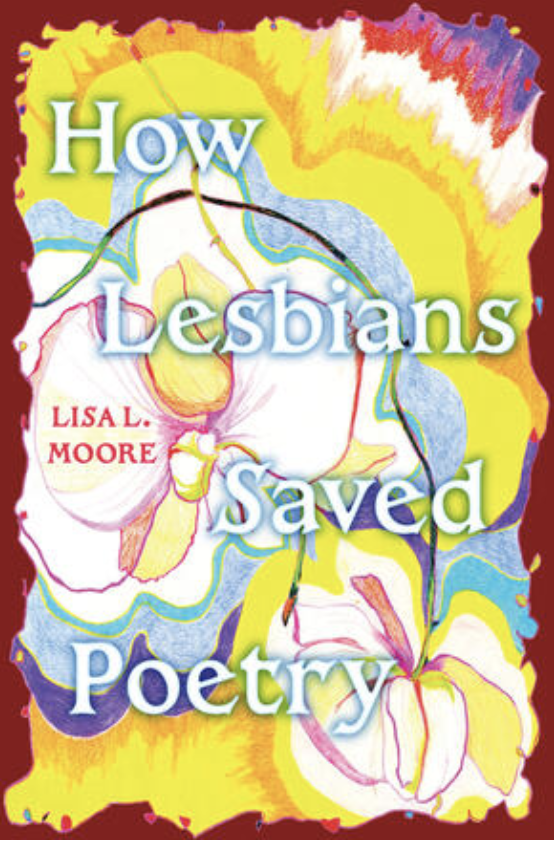
Of course, it’s exciting for me to have a new book coming out from the same press that publishes iconic feminist texts like This Bridge Called My Back. But I find that sharing my stories of art, institution-building, and queer, feminist, and liberation movement organizing also fills me with grief these days. It seems that the achievement of those decades of desire and labor are being rolled back in the span of mere months.
In 2025, Trump’s Department of Education rapidly put into place a program called “Ending Gender Extremism and Cutting Underused Programs,” and the DOE website now celebrates the closing of Black Studies, Latino Studies, Women’s and Gender Studies and related programs as “victories” in “changing the culture of higher education.” State university systems, including in Ohio, Florida, Iowa, my home state of Texas, and more, have passed repressive legislation and replaced academic leaders with political appointees determined to prohibit “LGBTQ or DEI studies,” making what the government calls “`the biological reality of sex’ a matter not of science but of law,” as historian Joan Scott notes. Scott describes the stakes of this attack for universities by connecting it to the Trump administration’s forestalling of investigations related to sex trafficker Jeffrey Epstein: “The abolition of gender studies is a way of further guaranteeing impunity to the elite men whose contempt for and exploitation of women and girls apparently knew no bounds, whether they actually slept with the women on offer or simply shared Epstein’s fantasies in order to gain influence or funding.” Following Scott, Kyla Wazana Tompkins and Tavia Nyong’o recently curated a group of essays analyzing The Epstein Class and the University. It’s becoming clear that the elimination of our programs, majors, students, staff, and faculty injure not just teaching and learning on campus, but the social progress of the last seventy years. As my University of Texas colleague (and fellow SUNY Press author) Angela Valenzuela has documented, gender and ethnic studies research is the “civil rights infrastructure” that powers liberation movements. Equality and democracy, imperfectly realized as they have been, are the real targets.
One of the gifts of working on this book was the opportunity to interview the protagonists of what Cherríe Moraga calls “a lesbian poetry of heroism.” Judy Grahn told me about being dishonorably discharged from the military in the 1960s for being gay, about starting the first domestic violence shelters in the country in a communal household in San Francisco, and about circulating mimeographed copies of her now-iconic “The Common Woman Poems” when no one would take a chance on publishing work about love between women. Minnie Bruce Pratt recalled publishing her earliest writing in The Female Liberation Newsletter in Alabama in 1969, “for two cents a mimeo.” Cheryl Clarke’s first book reached readers when Audre Lorde, Barbara Smith, and others created Kitchen Table: Women of Color Press to avoid the racist gatekeeping they encountered with some white-led feminist presses. Kitchen Table rescued This Bridge Called My Back, edited by Anzaldúa and Moraga, from one such organization and reprinted it in 1983, when it won awards and a wide readership. These were shoestring operations without which these well-loved texts, these national treasures, might never have made it to the twenty-first century. They remind me of the upsurge of analog tactics like zines, stickers, and imaginative protest performances among my students and other young activists today.
How Lesbians Saved Poetry also looks at the lesbian origins of the sonnet form, the revival of the sonnet powered by Black writers, and the on- and off-campus struggles to create institutions capacious enough to house the poetic energies of liberation movements. The book is full of struggle as well as joy. As it begins its life in the world, may it remind us that these attacks on our work are a backhanded compliment. Gender and ethnic studies have transformed every field of knowledge, from the humanities and social sciences to medicine, law, and engineering, as the scholarly definition of the human became more inclusive and accurate. Our work has been a boon to teaching and learning for everyone—everyone except an increasingly powerful elite that is fast destroying our institutions and our planet. So we all owe a debt to the conversations started by, among others, our lesbian poets, especially women of color. And these days, their stories might be a blueprint for rebuilding what is currently being destroyed.